01 / Fuel cells
PEM fuel cells explained
The membrane electrode assembly, electrode reactions, water management, efficiency and degradation in a proton exchange membrane fuel cell.
Read the guideThe electrochemistry, components and operating conditions that turn hydrogen into electricity and useful heat.
A fuel cell produces electricity through electrochemical reactions while fuel and oxidant are supplied. In a hydrogen PEM cell, protons pass through a polymer electrolyte and electrons flow through an external circuit. Water forms at the cathode.
Fuel-cell families use different electrolytes and temperatures. PEM, solid oxide and alkaline cells should not be given one shared operating specification. The initial guides focus on PEM technology because it connects directly to hydrogen quality and the historical FluidCELL research.
The membrane electrode assembly is the reaction core. The complete system also needs air supply, hydrogen management, cooling, controls and power conversion. Net electrical output is lower than gross stack output once those duties are included.
Water management illustrates why cell and system behaviour differ. The electrolyte needs suitable hydration, while excess liquid water can obstruct gas transport. Temperature, flow and humidity must work together as load changes.
Fuel quality is another system condition. Carbon monoxide and sulfur cannot be assessed from a bulk hydrogen fraction alone. Read the contaminant-specific quality guide alongside the electrochemistry explanation, especially for hydrogen obtained from reforming.
Terminology is defined in the technical glossary. Source material is linked below.
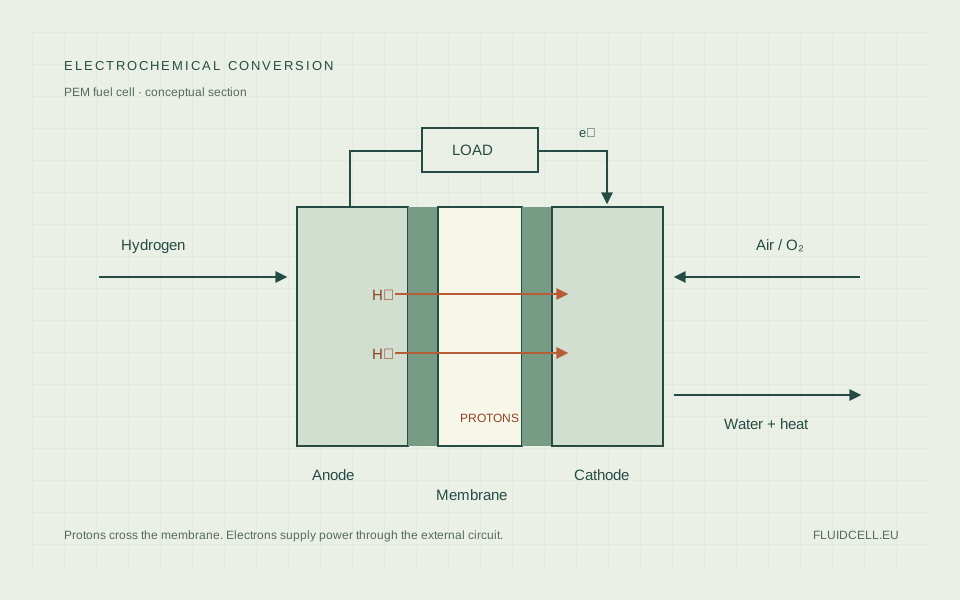
The membrane electrode assembly, electrode reactions, water management, efficiency and degradation in a proton exchange membrane fuel cell.
Read the guideWhy PEM fuel cells need contaminant-specific limits, how trace gases affect performance, and what a useful hydrogen quality specification includes.
Read the guideHow local electrolysis and reforming compare with delivered hydrogen, including demand, compression, storage, maintenance and energy supply.
Read the guide