01 / Hydrogen production
Hydrogen production from bioethanol
Ethanol steam reforming, competing reactions, catalyst selection and membrane separation, with a careful look at heat demand and carbon accounting.
Read the guideFeedstocks, reactions and energy boundaries in reforming and electrolysis, with detailed coverage of bioethanol membrane reforming.
Hydrogen can be produced by converting a hydrogen-containing feedstock or splitting water. A production route needs both a material balance and an energy balance. Calling the product clean without specifying the feed and energy supply leaves the main question unanswered.
Steam reforming produces a gas mixture. Electrolysis produces hydrogen and oxygen in separate compartments, but the hydrogen still needs conditioning suited to its user. The purification problem follows from the production chemistry.
Conventional methane reforming includes conversion with steam and subsequent water–gas shift chemistry. Ethanol has a different reaction network, including intermediates, methane and possible carbon deposits. The catalyst and steam ratio influence which products are formed.
Electrolysis uses electricity, and its system boundary includes power conversion, water treatment and gas handling. A stack electricity figure excludes some duties required by the complete installation. Electricity source and operating schedule also influence emissions and utilization.
Our detailed reforming coverage begins with bioethanol because it was the feedstock investigated by FluidCELL. Broader comparisons belong to the complete supply system: required hydrogen flow, purity, pressure and availability must be the same for each route.
Terminology is defined in the technical glossary. Source material is linked below.
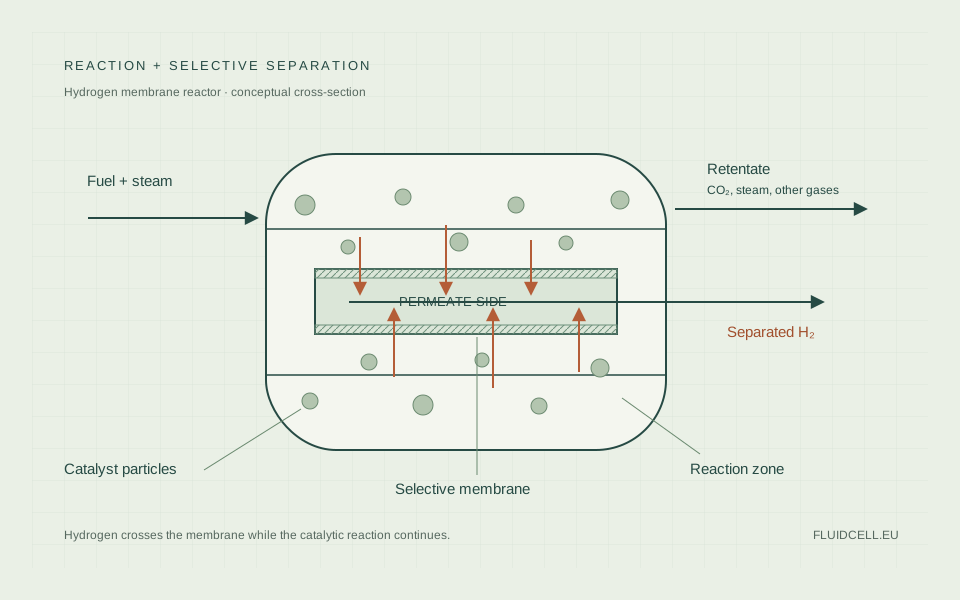
Ethanol steam reforming, competing reactions, catalyst selection and membrane separation, with a careful look at heat demand and carbon accounting.
Read the guidePalladium transport, partial-pressure driving force, reaction equilibrium, membrane area and the practical constraints of reformer integration.
Read the guideHow local electrolysis and reforming compare with delivered hydrogen, including demand, compression, storage, maintenance and energy supply.
Read the guide