01 / Hydrogen purification
Hydrogen purification: PSA vs membrane separation
Compare pressure swing adsorption and hydrogen-selective membranes by purity, recovery, product pressure, pretreatment and system economics.
Read the guideSeparate hydrogen concentration from fuel quality. Compare PSA and membranes, recovery, pressure and trace-contaminant requirements.
Hydrogen purification removes unwanted constituents from a hydrogen-containing stream. Pressure swing adsorption retains impurities on adsorbents. Membranes separate through material-specific transport. The preferred arrangement depends on feed composition and the product required.
Purity and recovery answer different questions. A highly pure product can contain only a fraction of the hydrogen entering the separator. Product pressure is another independent requirement, especially where the next step is storage or compression.
The word membrane covers polymers, porous inorganic materials and dense metals with different operating conditions and selectivities. A dense palladium layer transports hydrogen through the metal; it does not act as an ordinary porous screen.
For a PEM fuel cell, a total purity percentage is insufficient. Trace carbon monoxide and sulfur have different effects from an inert diluent. Specify individual analytes, their limits and a measurement method that reaches those limits.
The comparison guide explains PSA and membrane process choices. The fuel-quality guide follows the purified stream to its user, distinguishing older published threshold examples from the current ISO 14687 edition.
Terminology is defined in the technical glossary. Source material is linked below.
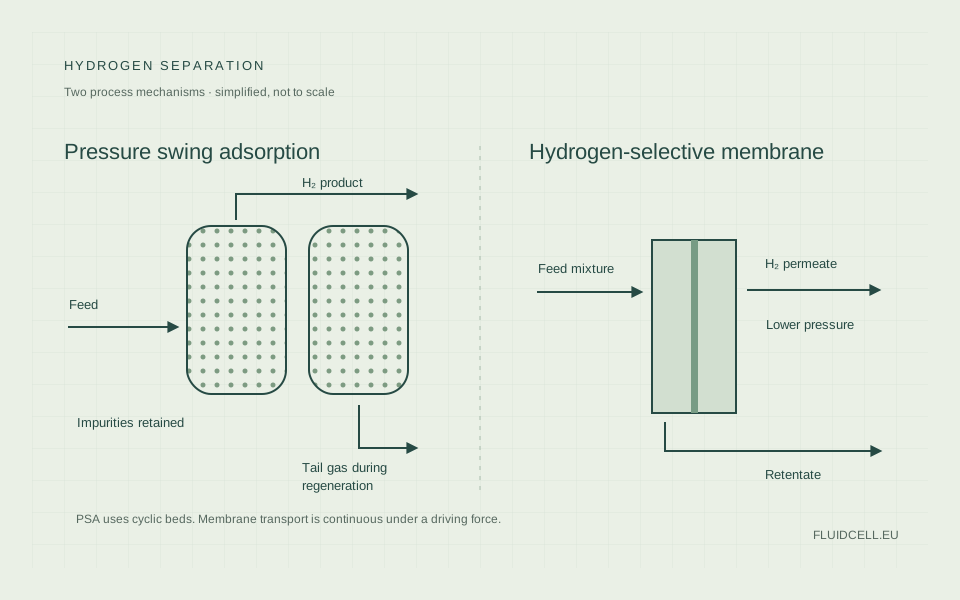
Compare pressure swing adsorption and hydrogen-selective membranes by purity, recovery, product pressure, pretreatment and system economics.
Read the guideWhy PEM fuel cells need contaminant-specific limits, how trace gases affect performance, and what a useful hydrogen quality specification includes.
Read the guidePalladium transport, partial-pressure driving force, reaction equilibrium, membrane area and the practical constraints of reformer integration.
Read the guide