01 / Membrane reactors
What is a membrane reactor?
How membrane reactors combine chemical reaction with selective separation, where they help, and what limits their performance.
Read the guideHow selective transport changes a reacting system, from equilibrium principles to palladium membranes and reactor integration.
A membrane reactor combines a chemical reaction with selective transport. Removing a product while it is formed can change the reacting mixture and allow an equilibrium-limited reaction to proceed farther than it would in a conventional reactor under comparable conditions.
Hydrogen-selective palladium membranes are one application. Other membranes use different transport mechanisms, and some supply a reactant instead of removing a product. Material choice follows the chemistry and operating conditions.
A selective film is one component of a reactor. The catalyst must generate hydrogen, the gas must deliver it to the membrane surface, and the installed module must separate it without leaks. A high flux in a clean-gas test does not establish performance in a reacting mixture.
Packed beds and fluidized beds create different heat- and mass-transfer conditions. Fluidization can improve mixing, but particle contact can damage exposed surfaces. Thin films reduce transport resistance while making support quality and defect control more consequential.
Use the fundamentals guide for the operating principle, then continue to the engineering guide for partial pressure, permeance and sizing. The ethanol guide connects those ideas to a specific reaction pathway.
Terminology is defined in the technical glossary. Source material is linked below.
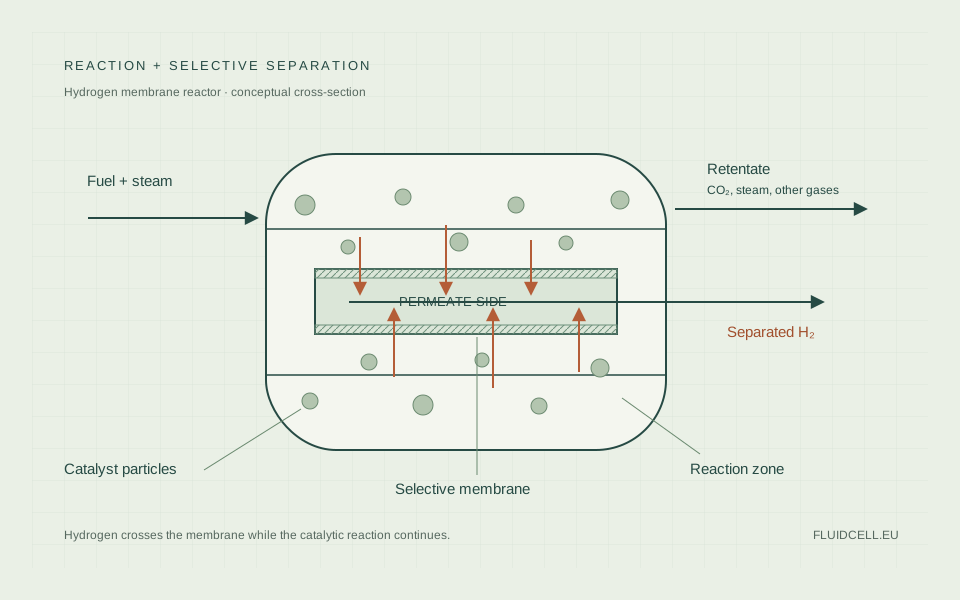
How membrane reactors combine chemical reaction with selective separation, where they help, and what limits their performance.
Read the guidePalladium transport, partial-pressure driving force, reaction equilibrium, membrane area and the practical constraints of reformer integration.
Read the guideEthanol steam reforming, competing reactions, catalyst selection and membrane separation, with a careful look at heat demand and carbon accounting.
Read the guide