01 / Hydrogen
Distributed hydrogen production
How local electrolysis and reforming compare with delivered hydrogen, including demand, compression, storage, maintenance and energy supply.
Read the guideUnderstand hydrogen as an energy carrier: how it is produced, purified, supplied and converted into useful power.
Hydrogen carries energy; producing it requires a feedstock and an energy input. Water electrolysis uses electricity. Reforming converts a fuel and steam into a hydrogen-containing gas. The emissions and efficiency belong to the complete route, including that energy supply.
Production is followed by whatever conditioning the user needs. A hydrogen-rich mixture is not necessarily fuel-cell-grade gas. Purification, drying, compression and storage are different operations and should be named separately.
Begin with the end use. Its demand profile, impurity limits and delivery pressure determine the useful product. Then compare production and delivery routes against the same specification. A local electrolyzer and a delivered-gas supply can serve the same user with very different equipment and operating costs.
A fuel cell converts hydrogen into electricity and heat. Its stack efficiency is only part of the energy balance: hydrogen production, auxiliaries and conversion losses matter when assessing the route from primary energy to useful output.
The guides below connect these stages. The distributed-production guide examines the supply boundary; the fuel-cell explanation follows hydrogen through the electrochemical cell.
Terminology is defined in the technical glossary. Source material is linked below.
How local electrolysis and reforming compare with delivered hydrogen, including demand, compression, storage, maintenance and energy supply.
Read the guideThe membrane electrode assembly, electrode reactions, water management, efficiency and degradation in a proton exchange membrane fuel cell.
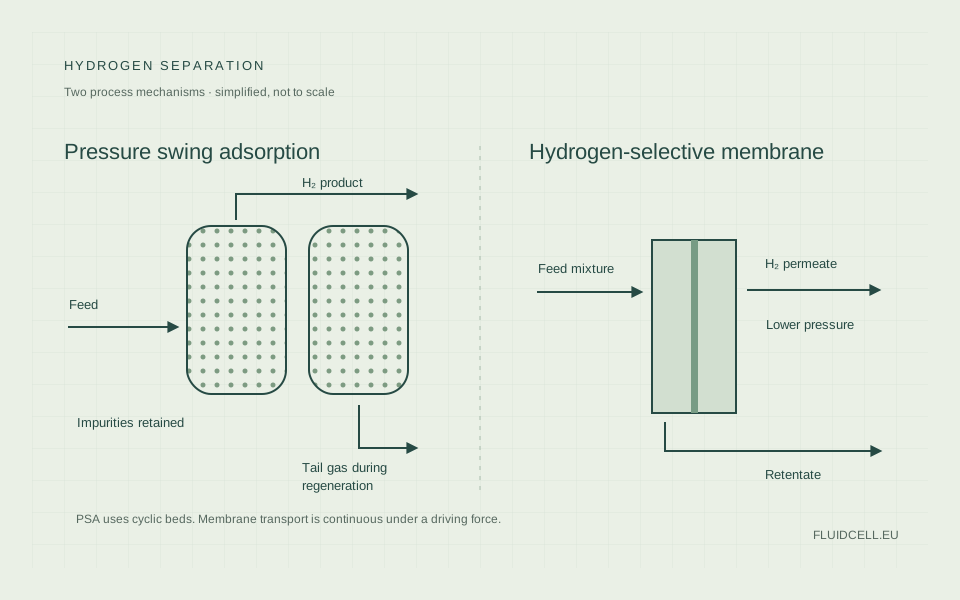
Read the guideCompare pressure swing adsorption and hydrogen-selective membranes by purity, recovery, product pressure, pretreatment and system economics.
Read the guideEthanol steam reforming, competing reactions, catalyst selection and membrane separation, with a careful look at heat demand and carbon accounting.
Read the guide